ANT Systems · INSEASE
PREVENTING EXCESSIVE USE OF INSECTICIDES
Pesticides are currently irreplaceable components of industrial agriculture despite their toxic hazards. Only 0.1% of the pesticides applied in an agricultural area reach the target, while the excess amount results in loss of biodiversity and decrease in invaluable species, water and soil pollution, development of pesticide resistance in plants, and numerous other public health risks.
01RESIDUES IN FOOD
Pesticide applications to crops result in varying levels of residues remaining in, or on, our food. Since residues can be contained within the entire piece of produce rather than just on the surface, peeling or washing fruit and vegetables before eating is often not enough to prevent exposure to pesticides.
02ENVIRONMENTAL IMPACT
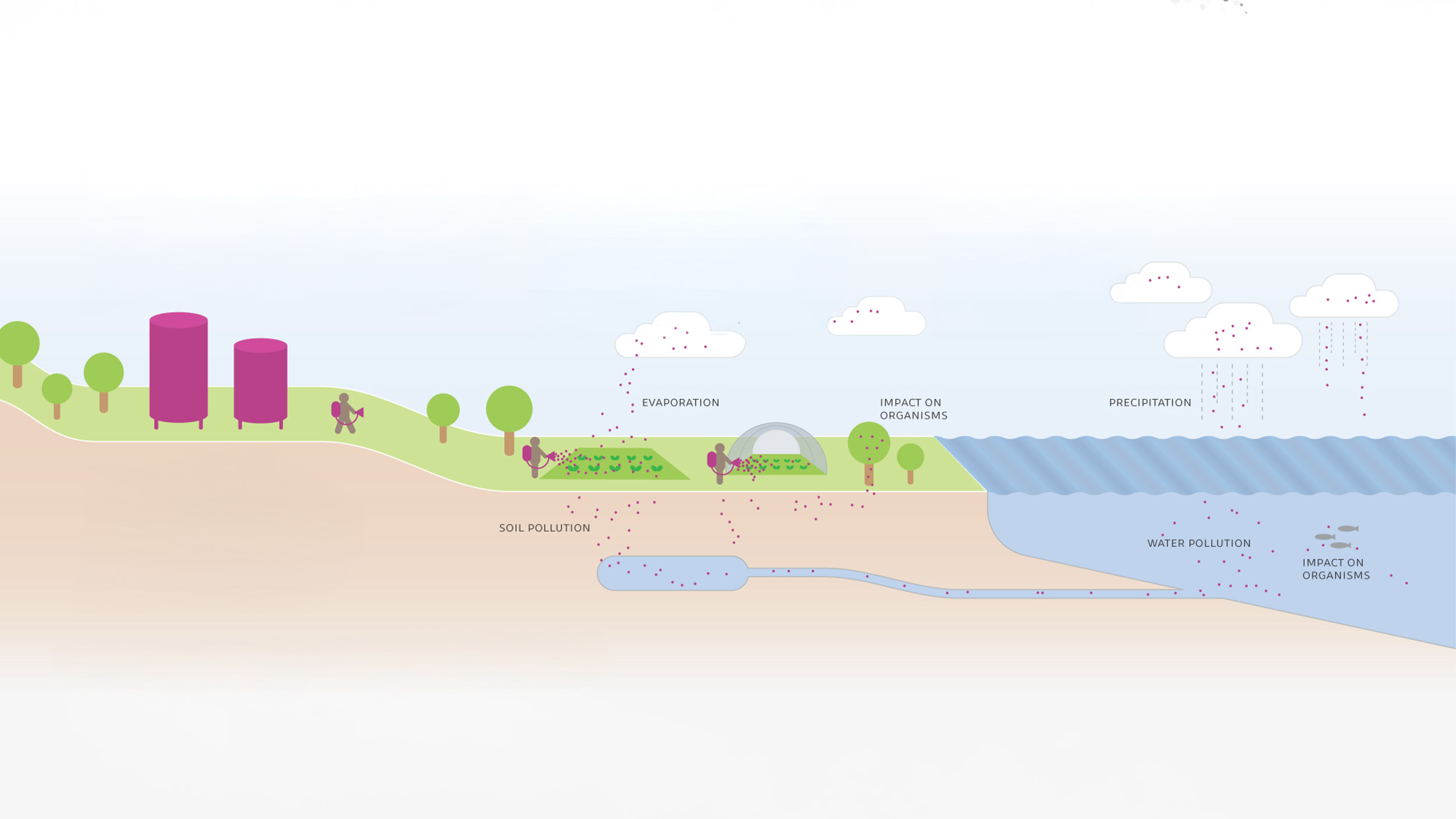
Pesticides cause biodiversity loss in soil. They seep into soil and reach to groundwater, nearby streams and rivers. Pesticides applied by spraying are carried on the wind, into non-agricultural areas.
03STORAGE OF PESTICIDES
Pesticide storage poses several public health and environmental problems including formation of persistent organic pollutants, deterioration to toxic products, and leaking from open or damaged containers.